
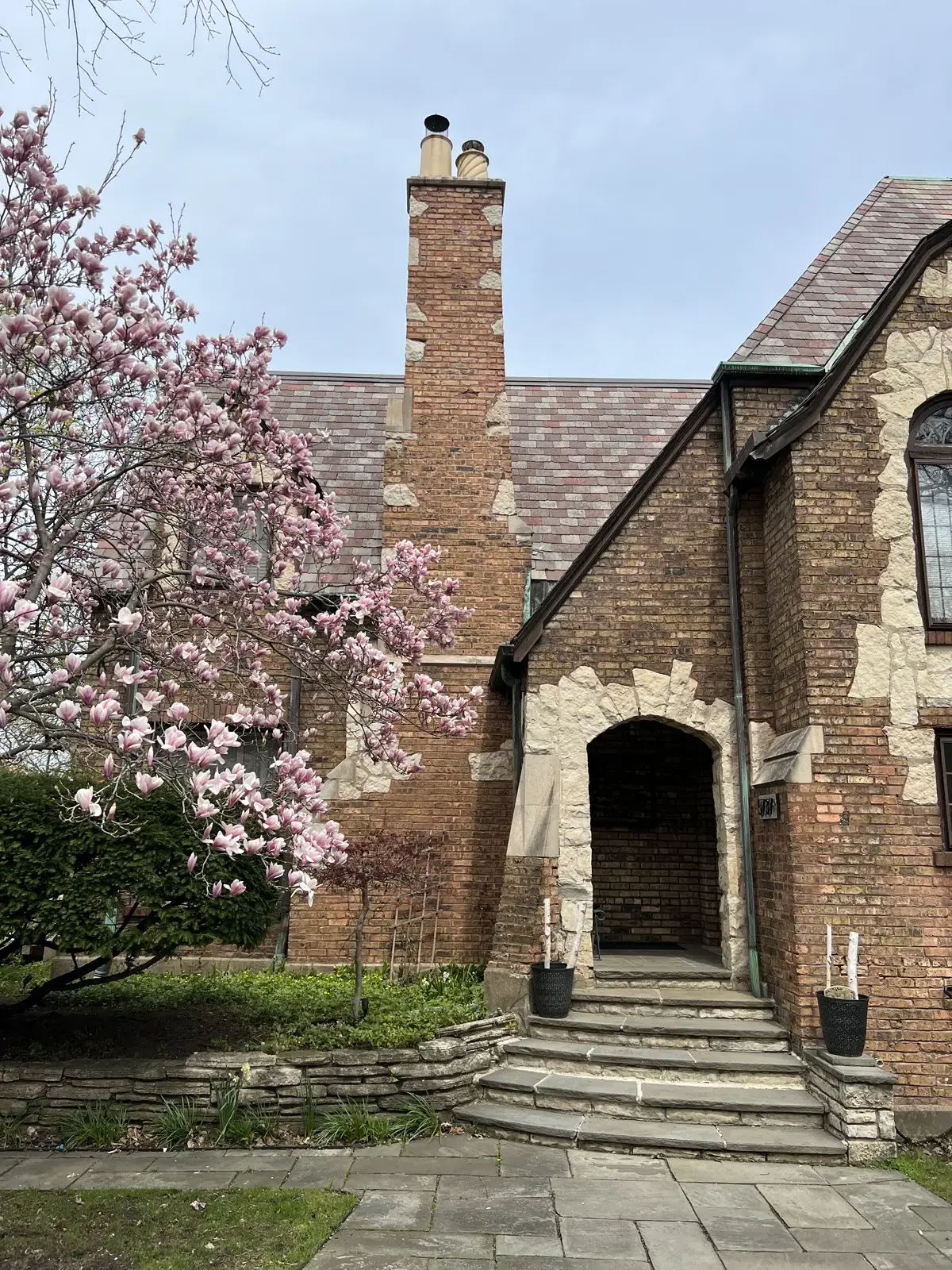
Of all the brickwork on your property, your chimney takes the worst beating. While your home's walls are partially protected by roof overhangs and neighboring structures, the chimney sits completely exposed above the roofline. In the Chicagoland area, this means it bears the full brunt of driving rain, heavy snow, high winds, and severe temperature swings.
Because chimney damage happens high above your normal line of sight, problems often go unnoticed until water starts leaking into the attic or ceiling.
Here are the four most common brick chimney problems we see and the structural fixes required to address them.
1. A Cracked or Failing Chimney Crown
The chimney crown is the concrete slab that sits on the very top course of brick. Its job is to act as a roof for the chimney structure, shedding water away from the masonry below.
The Problem: Over time, shifting, shrinkage, and freeze-thaw cycles cause the concrete crown to crack. Once water gets into these cracks, freezing temperatures expand them rapidly.
The Risk: Water bypasses the crown completely and runs down inside the brick walls of the chimney, rotting the mortar from the inside out.
The Fix: Minor cracks can sometimes be sealed with a commercial-grade elastomer coating. However, if the crown is deeply fractured or breaking apart, it must be completely demolished and a new concrete crown poured with a proper overhang to shed water safely.
2. Spalling Bricks
Spalling occurs when the face of a brick pops off, flakes, or crumbles away into a sandy powder.
The Problem: This is a direct result of moisture penetration combined with the freeze-thaw cycle. When water gets trapped inside a low-quality or poorly fired brick and freezes, the internal pressure shears the face right off.
The Risk: Spalling is progressive. Once a brick loses its hard exterior fire-skin, the soft interior absorbs water even faster, accelerating the destruction of surrounding bricks and threatening the chimney's structural stability.
The Fix: Spalled bricks cannot be patched or filled with mortar. The damaged bricks must be carefully chiseled out individually and replaced with new, matching structural bricks, then tied back into the wall with fresh mortar.
3. Deteriorated Mortar Joints
Mortar is designed to be softer than the surrounding brick so that the building can flex slightly without cracking the brick itself. Because of this, mortar naturally wears out faster than brick.
The Problem: Constant exposure to acidic flue gases from the inside and rainwater from the outside causes chimney mortar to erode, soften, and wash away.
The Risk: Deeply recessed or missing mortar joints allow bricks to loosen. Left untreated, the chimney can begin to lean or completely collapse during a heavy windstorm.
The Fix: Professional tuckpointing. The deteriorated mortar must be mechanically ground out to a clean, square depth of at least 1/2-inch to 3/4-inch, and then refilled with new mortar that matches the original strength, flexibility, and color.
4. Failing Metal Flashing
Flashing is the metal stripping installed where the brick chimney meets the shingles of your roof line. It creates a watertight seal at a major structural intersection.
The Problem: Standard flashing relies on sealant or caulking that dries out and cracks within 5 to 7 years. Additionally, poorly installed flashing can pull away from the brick as the roof and chimney settle independently.
The Risk: This is the number one cause of immediate interior water damage. Failing flashing leads to rotted roof decking, ruined drywall, and mold growth in your ceilings.
The Fix: The old sealant must be scraped away, and the metal must be inspected. Properly installed flashing requires a two-part system: a base flashing laced into the shingles and a counter-flashing embedded deeply into a mortar joint on the chimney wall.
Protect Your Investment Before Winter
A small crack in a chimney crown or a few loose mortar joints this summer can easily turn into a multi-thousand-dollar rebuilding project after another freezing winter. Regular inspections are the cheapest insurance policy you can buy for your masonry.
// Free assessment
Noticed this on your home?
Family owned since 1992. Most of our work comes from referrals, so we'll give you an honest read on whether the issue is urgent or something that can wait a season.
Mon–Fri 8–5 · Sat 8–2
// Or send your details