
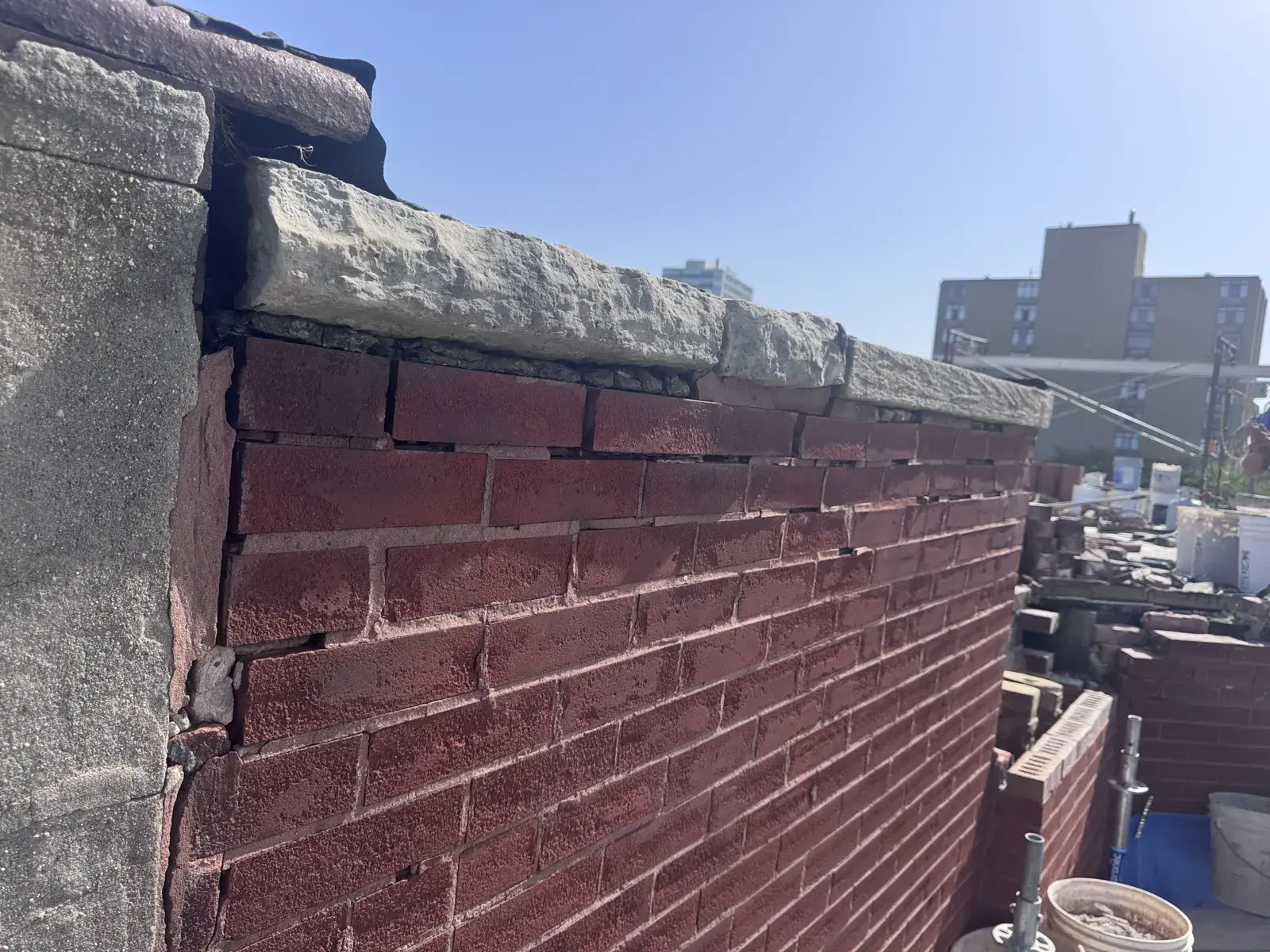
If you own a brick home in the Chicagoland area, your masonry is fighting a constant battle against the weather. The biggest threat to your exterior isn't just the cold — it's the brutal Chicago freeze-thaw cycle.
Brick and mortar are porous materials. During a wet Chicago fall or a mild winter day, precipitation soaks into the mortar joints. When the temperature inevitably plummets below freezing overnight, that trapped water turns to ice.
How the Freeze-Thaw Cycle Destroys Mortar
Because water expands by about 9% when it freezes, it acts like a microscopic wedge inside your masonry. Over a few seasons, this continuous expansion and contraction blows out the face of the mortar, leading to cracking, crumbling, and eventually, loose bricks.
Signs of Freeze-Thaw Damage
- Flaking or popping mortar — you'll notice sandy debris at the base of your walls.
- Recessed joints — the mortar sits much further back from the face of the brick than it originally did.
- Spalling — the actual face of the brick begins to shear off.
The Fix: Professional Tuckpointing
You cannot simply smear new mortar over failing joints. Proper restoration requires grinding out the damaged, deteriorated mortar to a consistent depth and replacing it with fresh mortar that correctly matches the historical composition and color of your home.
// Free assessment
Noticed this on your home?
Family owned since 1992. Most of our work comes from referrals, so we'll give you an honest read on whether the issue is urgent or something that can wait a season.
Mon–Fri 8–5 · Sat 8–2
// Or send your details