
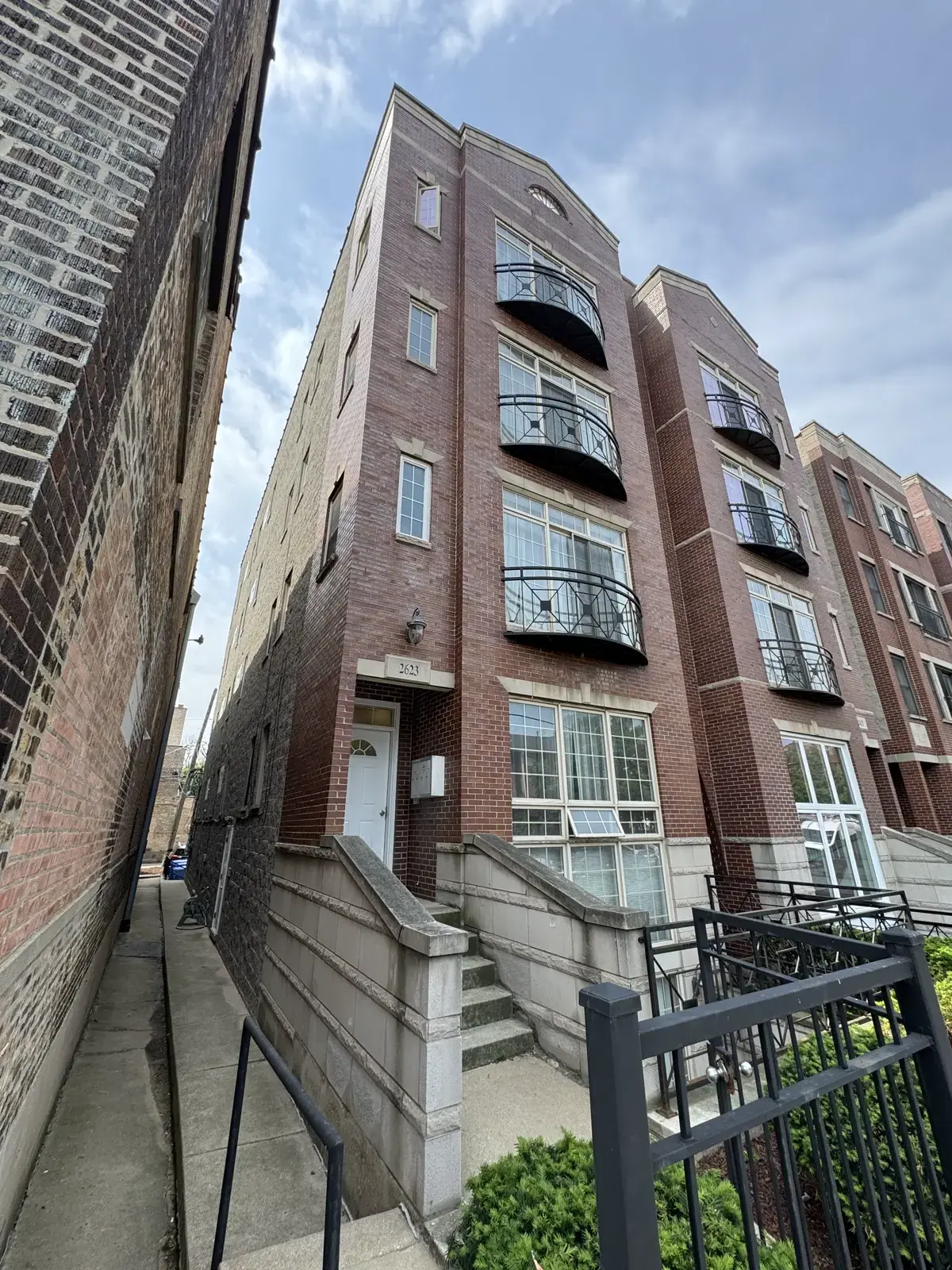
In Chicago, many concrete masonry unit (CMU) structures and split-face block buildings built over the last few decades suffer from severe water infiltration. The combination of highly porous block, heavy rain, and the freeze-thaw cycle forces water deep into the walls, leading to interior damage, mold, and structural degradation.
When a building begins taking on water, property owners need practical, highly effective solutions that stop the leaks without requiring the complete dismantling of the facade. Here is our approach to diagnosing and waterproofing these vulnerable structures.
Step 1: Spot Tuckpointing to Restore Integrity
You cannot successfully waterproof a wall that has structural gaps. Before any chemical sealers or coatings are applied, the masonry itself must be solid.
The first step in our waterproofing process is comprehensive spot tuckpointing. We inspect the entire facade to identify washed-out, deeply recessed, or cracked mortar joints. We grind out these failing joints and fill them with fresh, properly matched mortar. This restores the structural integrity of the wall and creates a uniform surface, ensuring that water cannot bypass the sealant through open cracks.
The Flashing Problem: What Can and Cannot Be Fixed
Many of the water issues in Chicago block buildings stem from a critical design flaw: a complete lack of proper flashing systems during the original construction. Flashing is the protective membrane that catches water inside the masonry wall and directs it back outside through weep holes.
Floor Level Flashing (Impractical to Retrofit)
In a properly built block structure, flashing should be installed at the floor levels to catch water traveling down the hollow cores of the blocks. Unfortunately, if this was skipped during original construction, retrofitting it is highly impractical. Installing floor-level flashing after the fact requires surgically cutting the building open at every floor line, which is an immensely invasive and cost-prohibitive process for most property owners.
Window and Door Flashing (Practical to Retrofit)
Conversely, retrofitting flashing around openings — such as windows and doors — is a very practical and necessary repair. We frequently find that water cascading down the face of a building enters directly above window lintels because no flashing or drip edge is present. We can retrofit proper stainless steel or membrane flashing above these openings to catch the water and kick it away from the building's interior.
Limestone Capstone Flashing
The top of the building is often the primary point of water entry. Limestone capstones or coping stones that sit on top of parapet walls are porous, and the mortar joints between them frequently crack. If there is no continuous flashing membrane installed underneath these capstones, water flows straight down into the wall cavity. At Star Tuckpointing, we can lift or remove the capstones, install a heavy-duty, through-wall waterproof membrane, and reset the stones to permanently cap the top of the wall.
Step 2: Sealing Block and Renaissance Stone with Chemtrete PB-100
Once the mortar is repaired and the accessible flashing issues are addressed, the bare masonry itself must be sealed. Both cinder blocks and the decorative renaissance stone often found on these facades act like giant sponges; they must be chemically treated to reject water.
For unpainted CMU, split-face block, and renaissance stone, we rely on Chemtrete PB-100. This is a heavy-duty, breathable silane/siloxane penetrating water repellent.
How it works: Unlike a surface paint, Chemtrete PB-100 penetrates deep into the pores of the block and the manufactured stone, chemically bonding with the masonry.
The benefit: It changes the surface tension of the masonry, causing water to bead up and roll off rather than soaking in. Crucially, it remains fully breathable, allowing any trapped interior vapor to escape without damaging the sealer, all without altering the natural architectural look of the renaissance stone or block.
For Previously Painted Buildings: Elastomeric Coatings
Chemtrete PB-100 is incredibly effective, but it only works on bare masonry because it needs to penetrate open pores. If a prior owner tried to solve water issues by painting the split-face block or renaissance stone, a penetrating sealer can no longer be used.
For buildings that have been previously painted, the most effective solution is a high-build elastomeric coating.
What it is: An elastomeric coating is a specialized, thick liquid membrane designed to go over existing paint.
The benefit: Because it is highly elastic, it stretches and moves with the masonry during Chicago's extreme temperature swings. This bridges hairline cracks and creates a continuous, flexible waterproof jacket over the previously painted facade, preventing the peeling and cracking associated with standard house paints while sealing out driving rain.
// Free assessment
Noticed this on your home?
Family owned since 1992. Most of our work comes from referrals, so we'll give you an honest read on whether the issue is urgent or something that can wait a season.
Mon–Fri 8–5 · Sat 8–2
// Or send your details