
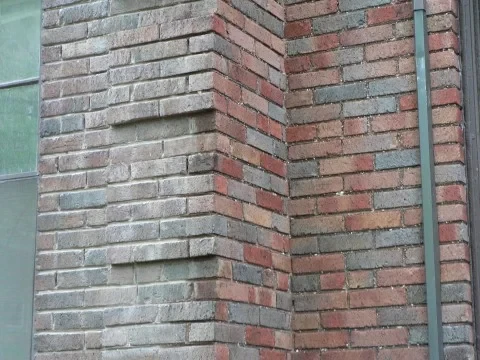
It is incredibly common for a Chicago homeowner to request three estimates for a tuckpointing project and receive three wildly different numbers — for example, one for $2,500, one for $4,500, and one for $6,000. When you are looking at the exact same brick wall, a price gap that large can be confusing. It is tempting to assume the higher bids are simply overpriced and go with the cheapest option.
However, in masonry, a drastic price difference rarely comes down to a contractor's markup. It almost always comes down to the scope of work. A low bid is usually cheap because the contractor is skipping the three most time-consuming (and critical) parts of the job. Before you sign a contract based on price alone, here is exactly what to look for.
1. The Grinding Depth: Prep Work is 90% of the Job
The actual application of new mortar is the fastest part of tuckpointing. The labor-intensive part is the preparation. For new mortar to permanently adhere to your wall, the old, failing mortar must be mechanically ground out using diamond blades. The industry standard typically requires grinding to a depth of 1/2-inch to 3/4-inch, or until you reach completely sound, undamaged mortar. This creates a deep, clean shelf for the new mortar to grab onto.
The Low Bid: To cut labor costs, a cheap quote often relies on "skimming." The crew will grind very superficially (1/8-inch or less) or skip grinding altogether and simply smear new mortar over the existing cracks.
The Result: Skimmed mortar has nothing to anchor to. After one or two Chicago winters, the thin layer of new mortar will flake off, and you will be paying to have the wall tuckpointed all over again.
2. Mortar Matching: Off-the-Shelf vs. Custom Blends
Not all mortar is created equal. The brickwork on a 100-year-old Chicago bungalow requires a very different mortar composition than a cinder block commercial building built in 2015. Historic Chicago common bricks are relatively soft and need a softer, lime-heavy mortar that allows the wall to flex and breathe. Your existing mortar has likely faded and weathered over decades; the new mortar needs to be tinted to match it seamlessly.
The Low Bid: A cut-rate contractor will often use pre-mixed, modern Portland cement straight from a big-box hardware store.
The Result: Modern cement is extremely rigid. When the building naturally shifts or the temperature drops, this hard mortar will not flex. Instead of the mortar cracking (which is easily fixable), the rigid mortar will cause the faces of your actual bricks to shear off, permanently damaging the masonry. Visually, you will also be left with a glaring, bright-gray patch that looks like a permanent scar on your wall.
3. Insurance Coverage: Who Carries the Risk?
Setting up heavy tubular scaffolding on narrow city gangways or working three stories up on a parapet wall carries inherent risks. Legitimate masonry contractors pay heavy premiums for comprehensive general liability and workers' compensation insurance to protect both their crew and your property.
The Low Bid: Fly-by-night operations frequently operate without proper insurance to keep their overhead low.
The Result: If an uninsured worker falls off a scaffold on your property, or if dropped materials damage your neighbor's roof, the financial liability can fall directly onto your homeowner's insurance policy — or onto you personally.
How to Evaluate Your Estimates
When comparing your quotes side-by-side, look past the final dollar amount. A professional estimate should explicitly detail each phase of the process. Use the four factors below to read between the lines.
Preparation
The low-cost approach skims over old joints to save labor hours. The professional standard specifies grinding out joints to a 5/8-inch or 3/4-inch depth so the new mortar has a substrate to bond to.
Materials
The low-cost approach uses standard, pre-mixed bag mortar. The professional approach blends custom mortar for historic compatibility and color matching so the repair disappears into the wall.
Cleanup
The low-cost approach leaves the wall as-is after pointing, with mortar smears baked onto the face of the brick. The professional approach includes chemical masonry washing to remove mortar smears once the joints have cured.
Documentation
The low-cost approach often shows up as a hand-written or vague scope of work. The professional approach provides a detailed written scope and a Certificate of Insurance (COI) upon request.
// Free assessment
Noticed this on your home?
Family owned since 1992. Most of our work comes from referrals, so we'll give you an honest read on whether the issue is urgent or something that can wait a season.
Mon–Fri 8–5 · Sat 8–2
// Or send your details